RodentsOctober 29, 20268 min read
Rat Droppings: What They Look Like, Health Risks & What to Do
What do rat droppings look like? See pictures of rat poop vs mouse droppings, how to tell if they're fresh, the health risks, and how to clean up safely.
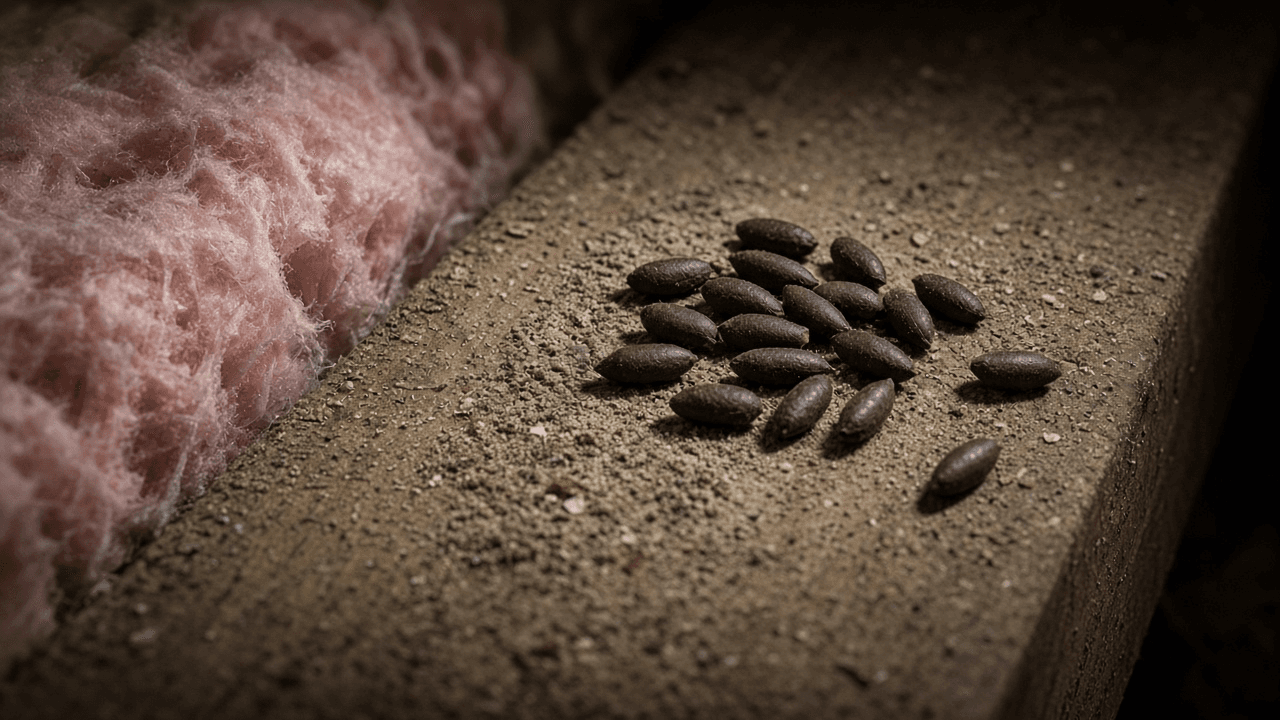
Rat droppings are dark brown to black pellets about ½ to ¾ inch long, shaped like a capsule or a large grain of rice. They're usually found in clusters along walls, in attics, under sinks, and behind appliances. Fresh rat droppings are shiny, moist, and soft; older ones turn dry, gray, and crumbly. Mouse droppings look similar but are much smaller, only about ⅛ to ¼ inch.
If you've found rodent droppings in your home, here's how to identify them, what they tell you about the infestation, and how to clean them up without putting your family at risk.
What do rat droppings look like?
Rat poop is easy to spot once you know what you're looking for:
- Size: about ½ to ¾ inch long, roughly the size of an olive pit
- Shape: capsule- or spindle-shaped, thicker in the middle
- Color: dark brown to black when fresh, fading to gray with age
- Pattern: grouped in clusters or scattered along the routes rats travel
A single rat can leave 40 or more droppings a day, so even a small infestation produces a lot of evidence quickly.
Roof rat droppings vs. Norway rat droppings
Central Florida has two common rats, and their droppings look slightly different:
| Roof rat | Norway rat | |
|---|---|---|
| Length | About ½ inch | About ¾ inch |
| Shape | Thinner, pointed ends, often slightly curved | Thicker, blunt ends, capsule-shaped |
| Where you'll find them | Attics, rafters, top of walls, kitchen cabinets | Garages, crawl spaces, ground floor, near burrows |
Roof rats are by far the more common rat in Orlando-area homes. If you're finding droppings in the attic or on top of insulation, it's almost certainly a roof rat. Learn more in our roof rat vs Norway rat guide.
Rat droppings vs. mouse droppings
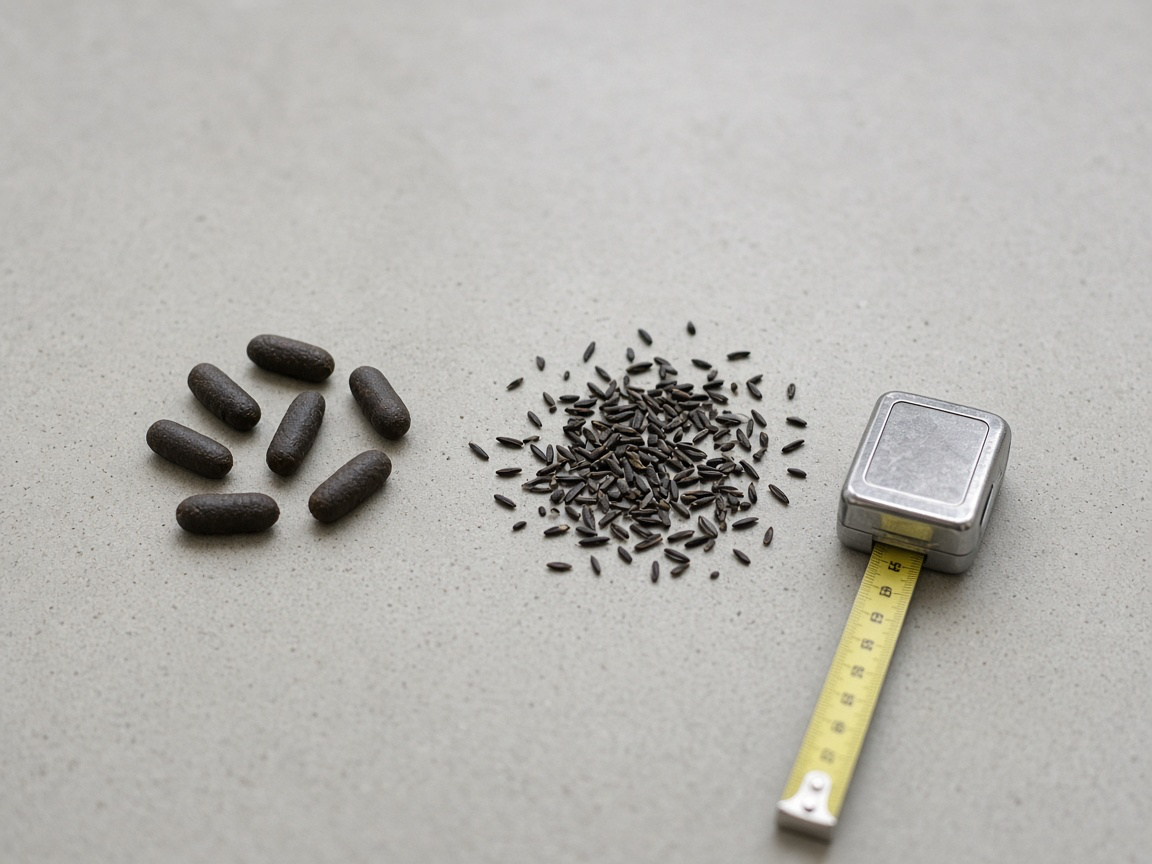
Size is the giveaway. Rat droppings are two to three times longer than mouse droppings.
| Feature | Rat droppings | Mouse droppings |
|---|---|---|
| Length | ½–¾ inch | ⅛–¼ inch |
| Looks like | Olive pit or large grain of rice | Grain of rice or chocolate sprinkle |
| Ends | Blunt (Norway) or pointed (roof rat) | Pointed |
| Amount | Fewer, larger clusters | Many small pellets scattered widely |
Knowing which rodent you have matters because rats and mice behave differently, use different-sized entry points, and need different trapping strategies.
How to tell if rat droppings are fresh or old
Freshness tells you whether you have an active infestation or evidence left behind from an old one.
- Fresh droppings are dark, shiny, and moist, with a putty-like texture. Pressed with a stick (never your fingers), they'll squish.
- Old droppings are dull, dry, gray or chalky, and crumble when touched.
A simple test: clean up every dropping in an area, then check again in a day or two. New droppings mean rats are still active. Mixed fresh and old droppings usually mean a long-standing problem.
Where rats leave droppings
Rats tend to defecate along the routes they travel and near food and nesting sites. In Florida homes, check:
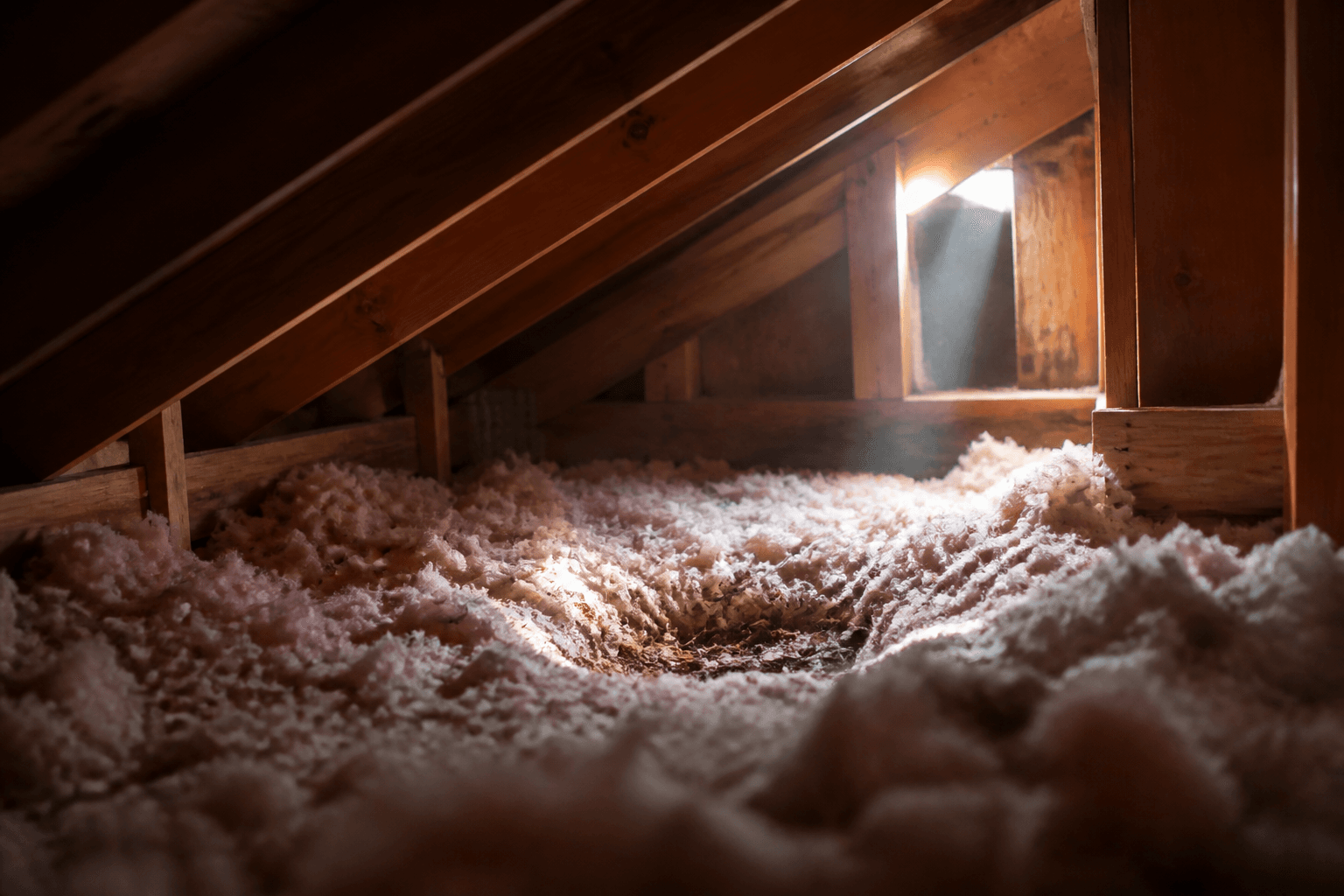
- Attics: along joists, on top of insulation, near the soffits and roofline
- Under kitchen and bathroom sinks, especially where plumbing passes through the wall
- Behind and under appliances: refrigerators, stoves, dishwashers, water heaters
- Pantries and cabinets: near chewed food packaging
- Garages: along walls, near stored pet food, bird seed, or grass seed
- Along baseboards and wall edges, often with dark grease rub marks nearby
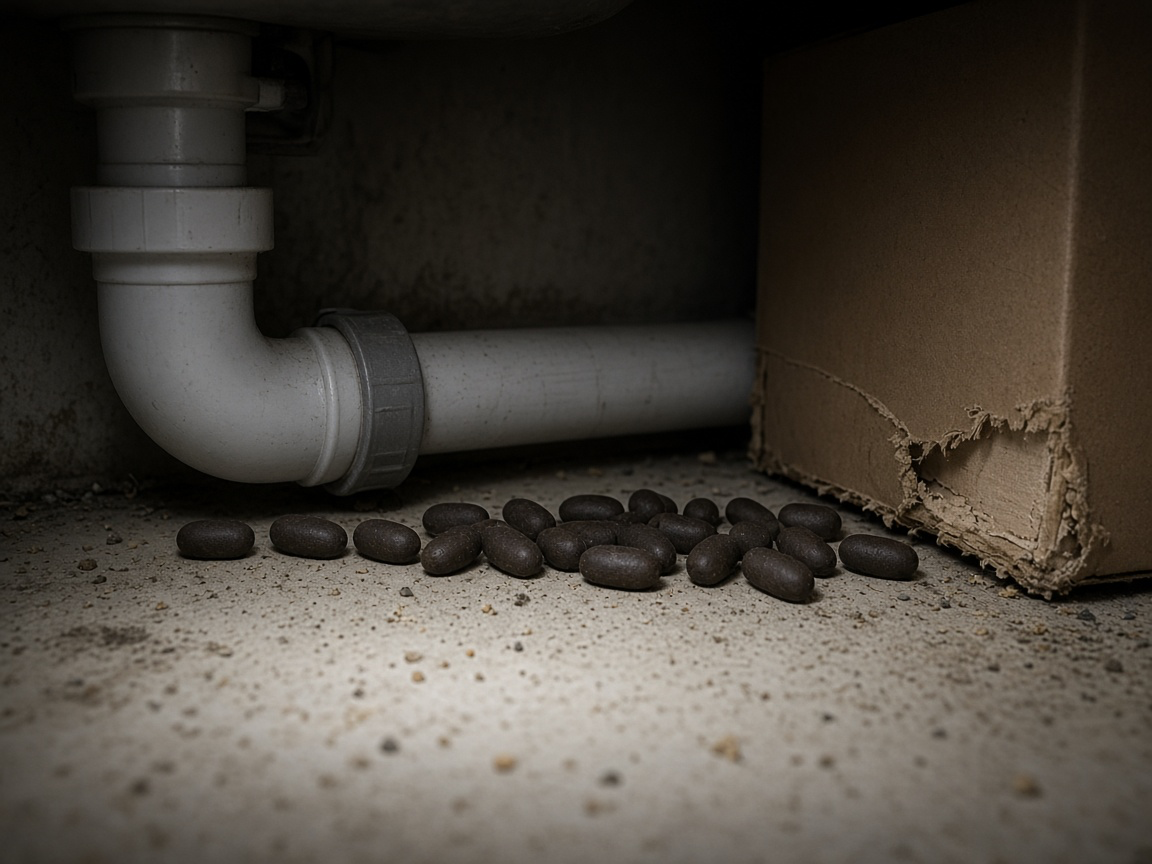
Finding droppings in more than one of these areas usually means rats are nesting inside the structure, not just passing through. See how to deal with rodents in the attic or rodents in the walls.
Are rat droppings dangerous?
Yes. Rat droppings and urine can spread bacteria and viruses, and the risk goes up when dried droppings are disturbed and become airborne dust. Health concerns linked to rodent droppings and urine include:
- Salmonella: contaminates food and surfaces rats walk across
- Leptospirosis: spread through rat urine, especially around moisture
- Hantavirus: mainly associated with wild mice and rare in Florida, but it's the reason health agencies recommend wet cleanup instead of sweeping
- Allergens and asthma triggers: dried droppings and urine can affect sensitive family members
Droppings also tell you rats are gnawing nearby. That puts wiring, insulation, and stored belongings at risk. If anyone in your home feels sick after exposure to rodent droppings, talk to a doctor and mention the exposure.
How to clean up rat droppings safely
Follow the CDC's guidance for rodent cleanup. Never sweep or vacuum dry droppings, because that kicks contaminated particles into the air.
- Ventilate. Open doors and windows and leave the area for at least 30 minutes.
- Gear up. Wear rubber or plastic gloves. For heavy contamination or a closed attic, add an N95 mask.
- Soak. Wet the droppings and any urine stains with a disinfectant or a fresh bleach solution (1 part bleach to 10 parts water). Let it sit for 5 minutes.
- Wipe up. Use paper towels to pick up the droppings and throw them away in a sealed plastic bag.
- Disinfect the area. Mop or wipe floors, counters, and cabinets with disinfectant. Steam-clean or wash any affected fabrics.
- Wash up. Disinfect your gloves before removing them, then wash your hands well with soap and warm water.
For large amounts of droppings, attic insulation soaked with urine, or nests in walls, it's safer to have a professional handle cleanup as part of rodent control.
Things that look like rat droppings
Not every dark pellet is rat poop. Common Florida look-alikes:
- Cockroach droppings: much smaller, like coffee grounds or black pepper, with ridges along the sides. See cockroach control.
- Lizard and gecko droppings: similar in size to mouse droppings but with a white tip on one end. Very common on Florida porches and lanais.
- Bat guano: piles up under roosting spots and crumbles into shiny insect fragments when crushed. See bat removal.
- Termite frass: tiny, hard, six-sided pellets that look like sand or sawdust. Our signs of termites guide covers what it looks like.
What to do after finding rat droppings
- Identify them. Use the size and shape to confirm rat vs. mouse, and roof rat vs. Norway rat.
- Check freshness. Clean the area and recheck in 24–48 hours to confirm activity.
- Clean up safely using the wet-cleaning steps above.
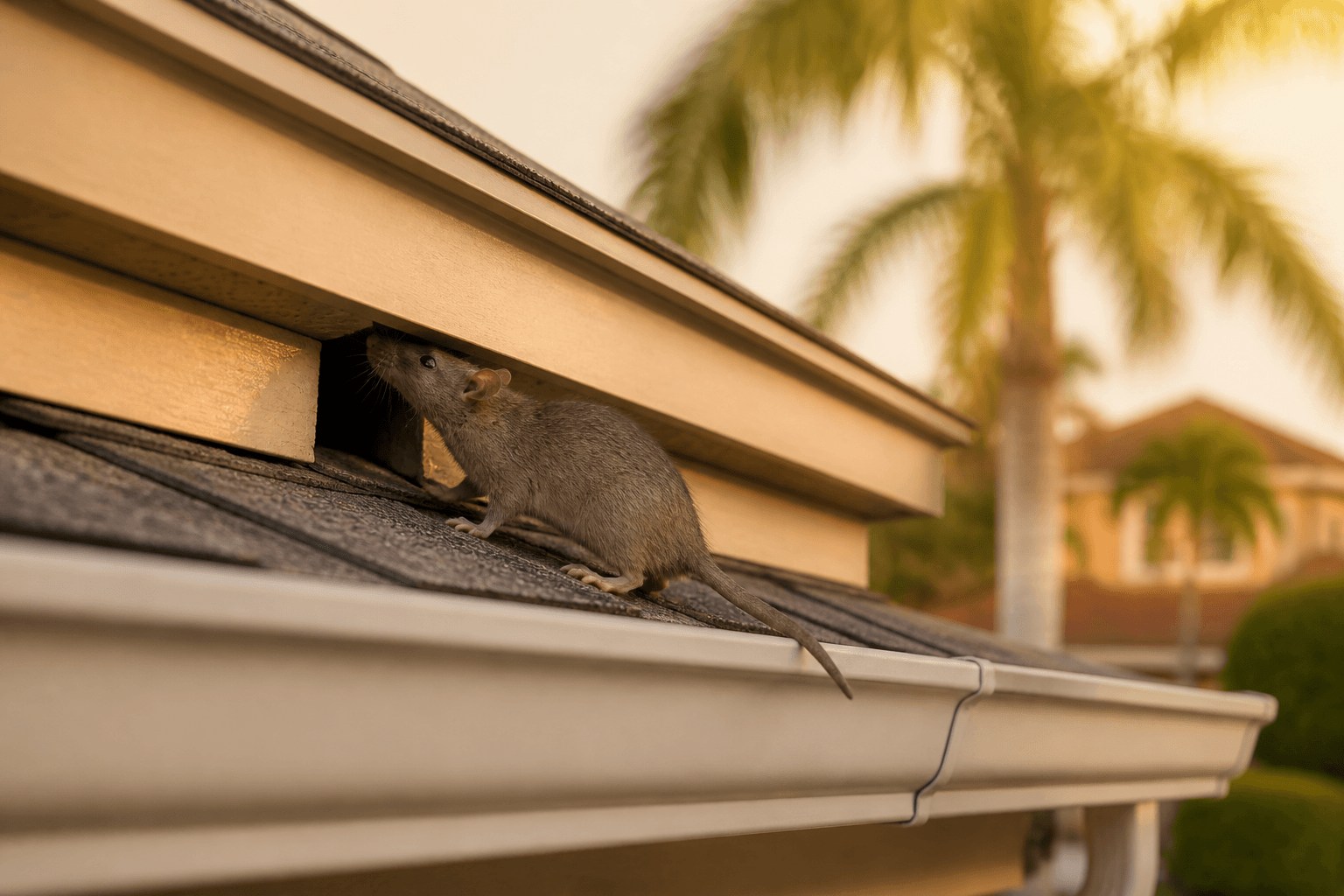
- Find the entry points. Droppings trace back to the gaps rats are using: soffits, roof vents, AC line penetrations, and garage door corners.
- Get rid of the rats and seal them out. Traps alone rarely solve the problem because new rats keep coming in through the same gaps.
A professional rat exterminator can confirm the species, remove the active rats, and handle rodent exclusion so they can't come back.
Frequently Asked Questions
What does rat poop look like?
Rat poop is dark brown to black, about ½ to ¾ inch long, and shaped like a capsule or a large grain of rice. Roof rat droppings have pointed ends, and Norway rat droppings are larger with blunt ends.
How can you tell the difference between rat and mouse droppings?
Size. Rat droppings are ½ to ¾ inch long, while mouse droppings are only ⅛ to ¼ inch long, about the size of a grain of rice. Mouse droppings are also more numerous and scattered.
Do rat droppings mean I have an infestation?
Fresh droppings mean rats are active in your home right now. Because rats rarely live alone and breed quickly, finding droppings in more than one place usually means an established infestation.
Is it safe to vacuum rat droppings?
No. Vacuuming or sweeping dry droppings can release contaminated dust into the air. Soak them with disinfectant or a bleach solution first, then wipe them up with paper towels while wearing gloves.
What should I do if I find rat droppings in my attic?
In Central Florida, attic droppings almost always mean roof rats. Avoid disturbing them, and have the attic inspected to find the roofline entry points. Removing the rats without sealing those gaps lets new ones move right back in.
Found rat droppings in your home? Panther Pest Control offers free rodent inspections across Orlando and Central Florida. We'll identify what you have, remove the rats, and seal them out for good. Get a free quote or call 407-713-7853.