RodentsJuly 31, 20266 min read
How to Catch a Rat in Florida Homes
Struggling to catch a rat? Learn the best traps, bait, and placement to catch rats fast in your Orlando home — plus why sealing entry points matters most.
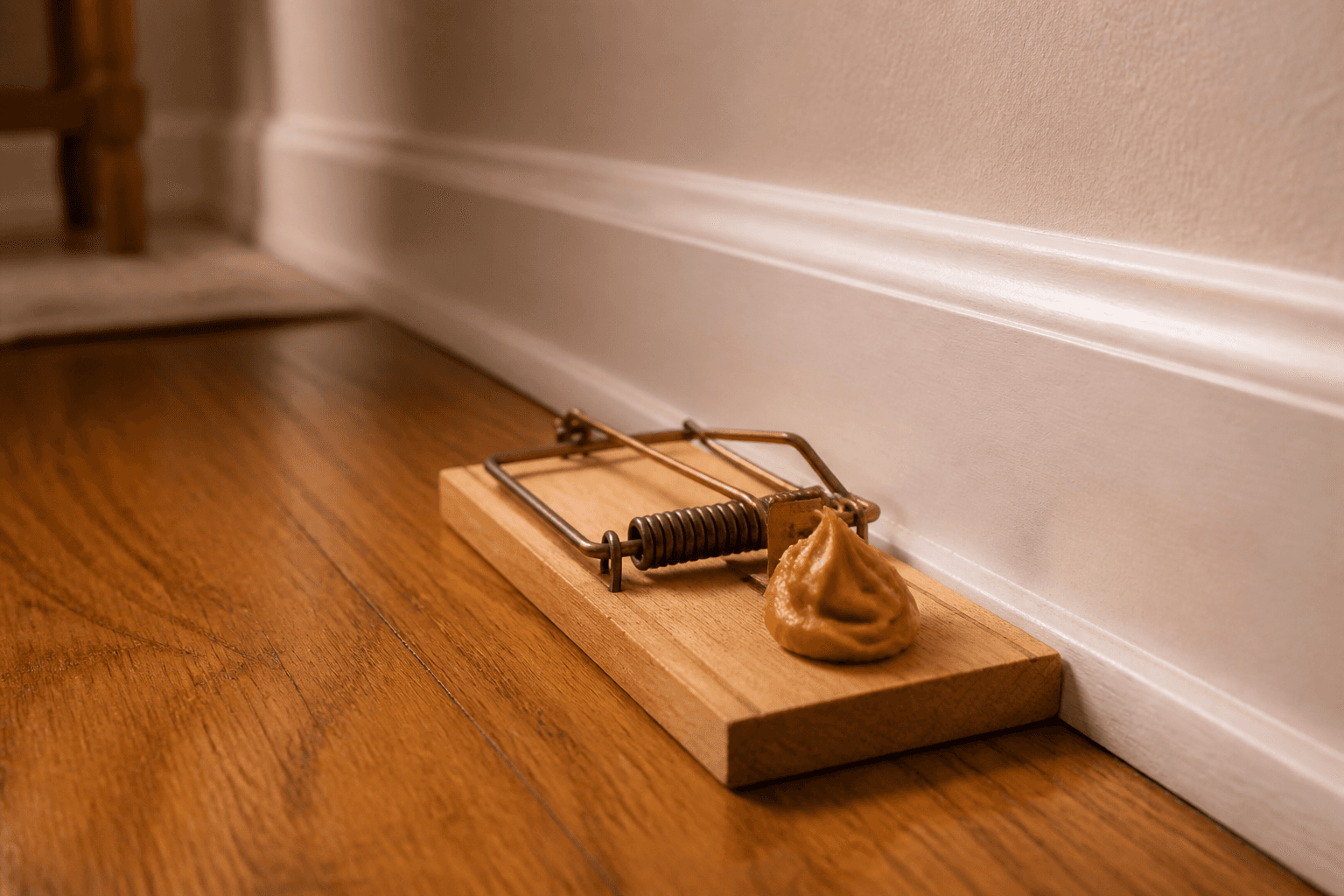
To catch a rat, place several snap traps along walls and runways where rats travel, bait them with a small dab of peanut butter, and set them flush and perpendicular to the wall. Leave traps unset for a day or two first so wary rats get comfortable, then set them all at once. Placement matters far more than the trap you choose.
Rats are cautious and smart, which is why so many DIY attempts fail. Do it right and you'll catch them fast.
Choose the right trap
| Trap type | Notes |
|---|---|
| Wooden/plastic snap trap | Most effective and humane; cheap and reusable |
| Bucket trap (DIY) | Great for multiple rats — see our homemade trap guide |
| Electronic trap | Quick kill; higher cost, good for indoors |
| Live/cage trap | Requires relocation; often less effective for rats |
| Glue board | Not recommended — inhumane and unreliable |
| Poison bait | Avoid indoors — rats die in walls/attics and cause odor |
The best bait for rats
- Peanut butter is the top choice — sticky, aromatic, and hard to steal.
- Dried fruit, nuts, or a bit of bacon also work.
- Use a small amount so the rat must tug at it and trigger the trap.
- Skip cheese — it's a myth and dries out quickly.
Where to place traps (the real secret)
Rats stick to the edges of rooms and established runways. Set traps where the evidence is:
- Along walls, with the trigger end facing the wall (perpendicular).
- Near droppings, gnaw marks, and grease trails.
- In the attic and garage, common rat highways in Florida homes.
- Behind appliances and in dark, low-traffic corners.
- Use many traps — 6–12 for an active infestation — spaced 6–10 feet apart.
Pro technique: pre-bait first
Rats are neophobic — suspicious of new objects. For stubborn rats, place baited but unset traps for 1–2 nights so they learn the food is safe, then set them all at once. You'll often catch several the first night.
Why catching rats is only half the job
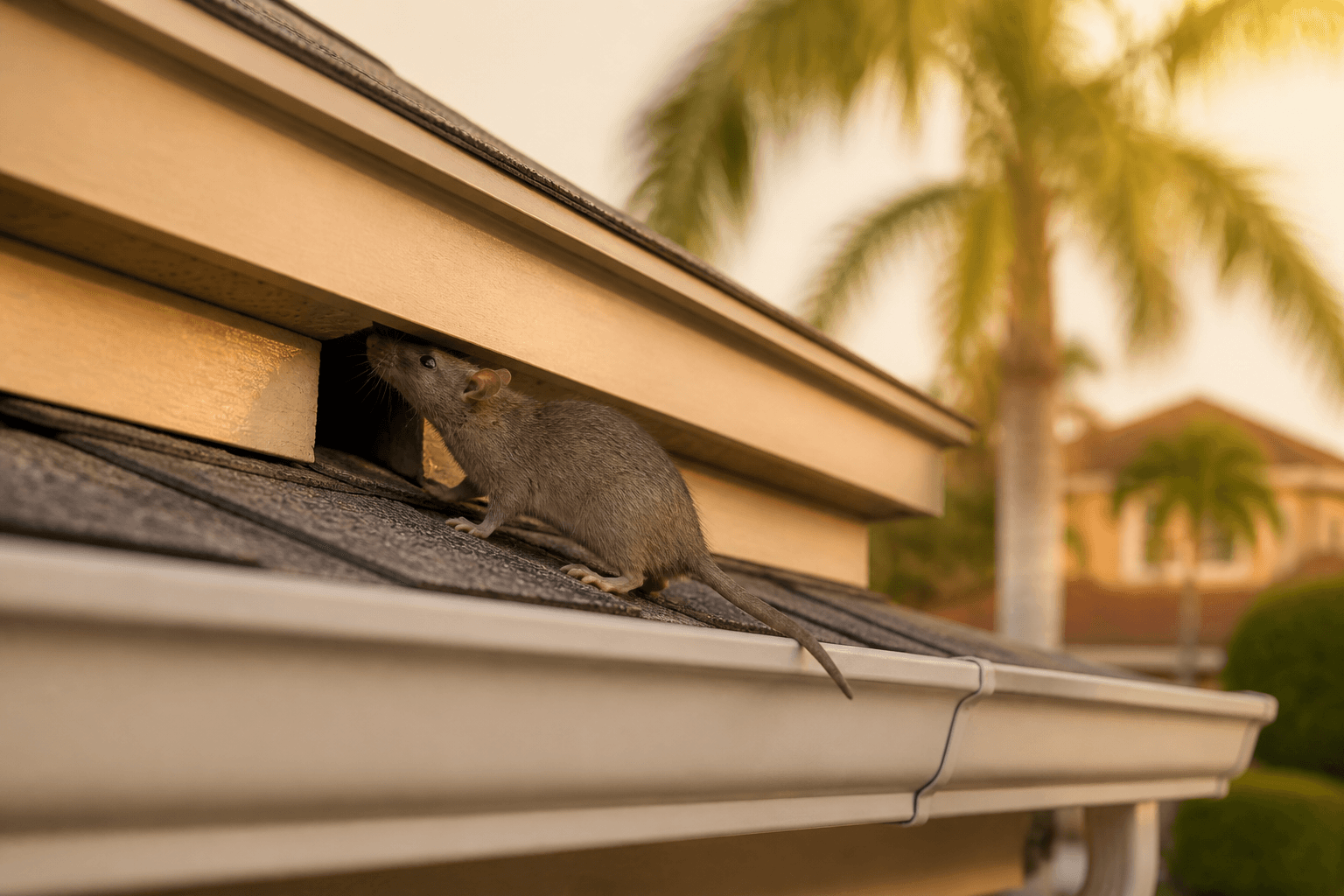
Every rat you catch is replaced if new ones can still get in. Lasting control means sealing the entry points — roofline gaps, vents, and pipe penetrations — with chew-proof materials, plus trimming trees away from the roof. Rats climb walls and wires easily, so entry points are often up high.
If rats are in the attic or walls, or trapping isn't keeping up, our rodent control services in Orlando combine trapping, exclusion, and monitoring with a warranty.
Frequently Asked Questions
What is the best bait to catch a rat?
Peanut butter is the most effective bait. Use a small dab so the rat has to work at it, which triggers the trap more reliably than a large glob it can lick off.
Why am I not catching the rat?
Usually it's placement or trap-shyness. Set traps tight against walls on active runways, use several at once, and pre-bait unset traps for a night or two so wary rats lose their caution.
How many traps should I set?
For an active infestation, set 6–12 traps spaced a few feet apart along walls and runways. Too few traps is the most common DIY mistake.
Should I use rat poison instead?
Not indoors. Poisoned rats often die inside walls or the attic, creating strong odors and attracting flies. Snap traps let you remove rats cleanly.
Can't get ahead of the rats? Panther Pest Control traps, removes, and seals your Orlando home so they stay gone. Get a free quote today.