TermitesOctober 3, 20267 min read
Subterranean vs Drywood Termites: How to Tell the Difference in Florida
Subterranean vs drywood termites: how they look, where they live, the signs they leave, and how each is treated in Florida homes.
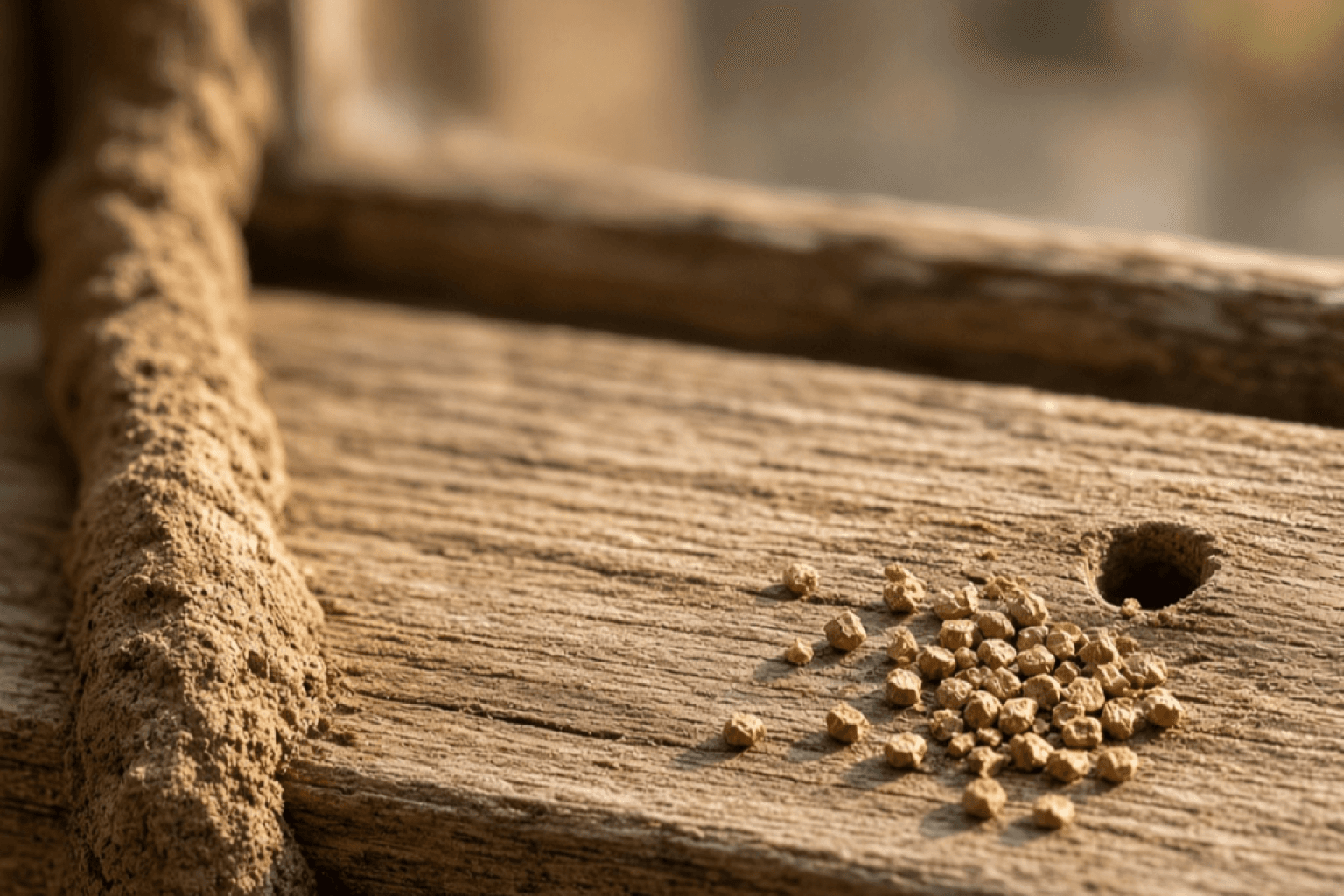
The main difference between subterranean and drywood termites is where they live. Subterranean termites nest in the soil and build mud tubes to reach the wood in your home. Drywood termites live entirely inside dry wood — no soil contact — and push out tiny pellets (frass). That one difference changes the signs you'll see, how much damage they cause, and how they're treated.
Central Florida has both, plus the invasive Formosan subterranean termite, so it pays to know which one you're dealing with. Here's how to tell them apart.
Subterranean vs drywood termites at a glance
| Feature | Subterranean termites | Drywood termites |
|---|---|---|
| Where they nest | In the soil (Formosans can also nest in walls) | Inside dry wood — framing, trim, furniture |
| Moisture needs | High — need soil or a water source | Low — get water from the wood |
| Telltale sign | Mud tubes on foundations and walls | Piles of tiny pellets (frass) and kick-out holes |
| Damage pattern | Follows the grain, packed with soil/mud | Smooth, clean galleries across the grain |
| Colony size | Large — thousands to millions | Small — usually a few thousand or less |
| Swarm timing (FL) | Late winter–spring; Formosans on late-spring evenings | Often late summer–fall nights, near lights |
| Typical treatment | Sentricon® baiting and/or liquid soil barrier | Spot treatment or, if widespread, tent fumigation |
How they live: soil vs. wood
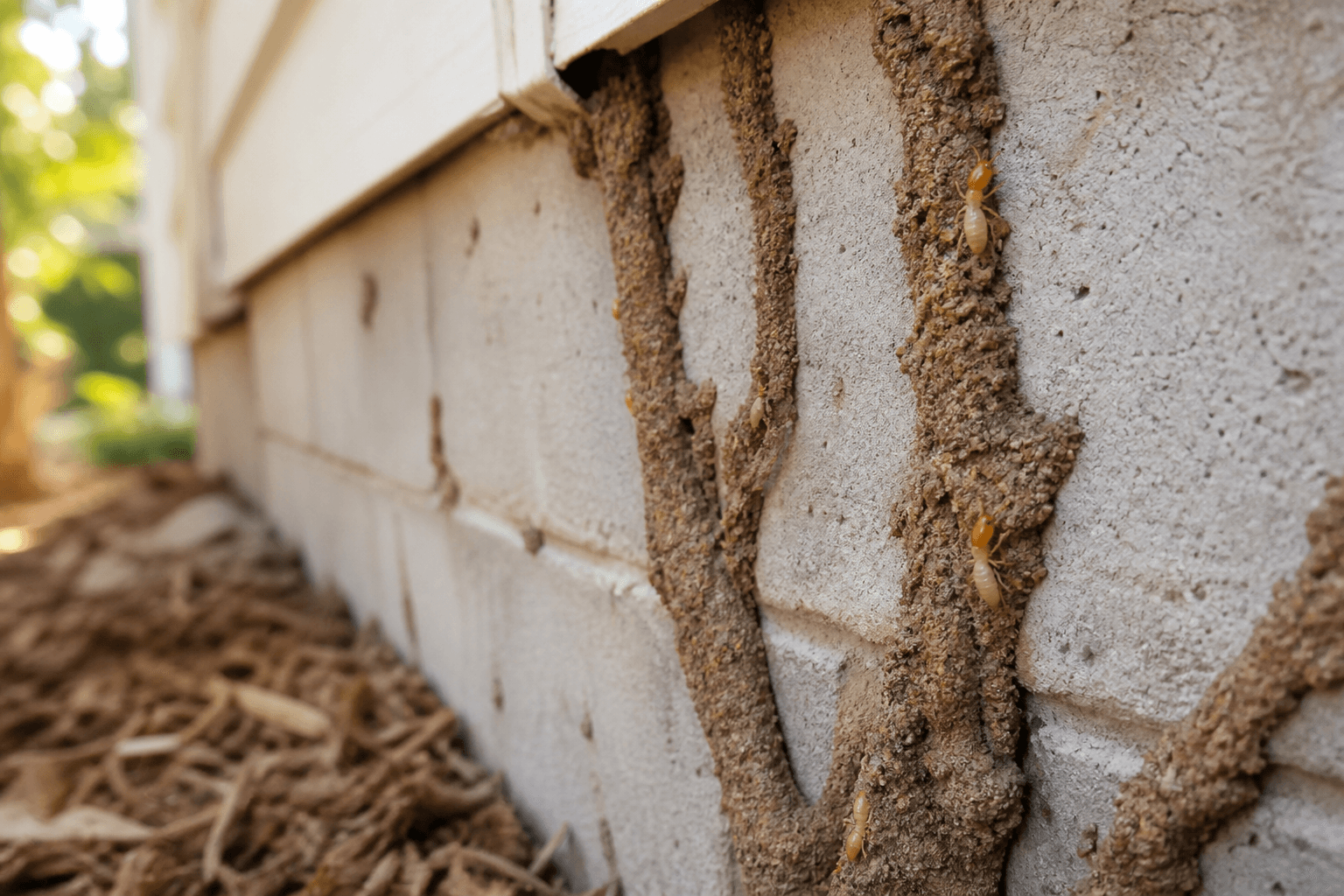
Subterranean termites need moisture to survive, so the colony lives underground and workers commute to food. Because open air dries them out, they build pencil-width mud tubes up foundations, slab cracks, and plumbing penetrations to reach the wood in your home. In Florida the main species are the native Eastern subterranean termite and the invasive Formosan subterranean termite, which forms enormous colonies and can even build carton nests inside wall voids when it finds a leak.
Drywood termites skip the soil entirely. A pair of swarmers seals itself into a crack in dry wood — attic framing, window trim, fascia, even furniture — and the colony grows inside that wood. They get the water they need from the wood itself, which is why you'll find them in places subterranean termites can't reach without a tube.
How to tell them apart by the signs they leave
Signs of subterranean termites
- Mud tubes on the foundation, slab edge, garage walls, or inside cabinets
- Hollow or blistered baseboards and bubbling paint near the floor
- Swarmers or shed wings near windows and doors, usually in spring
- Damaged wood packed with soil and mud
Signs of drywood termites
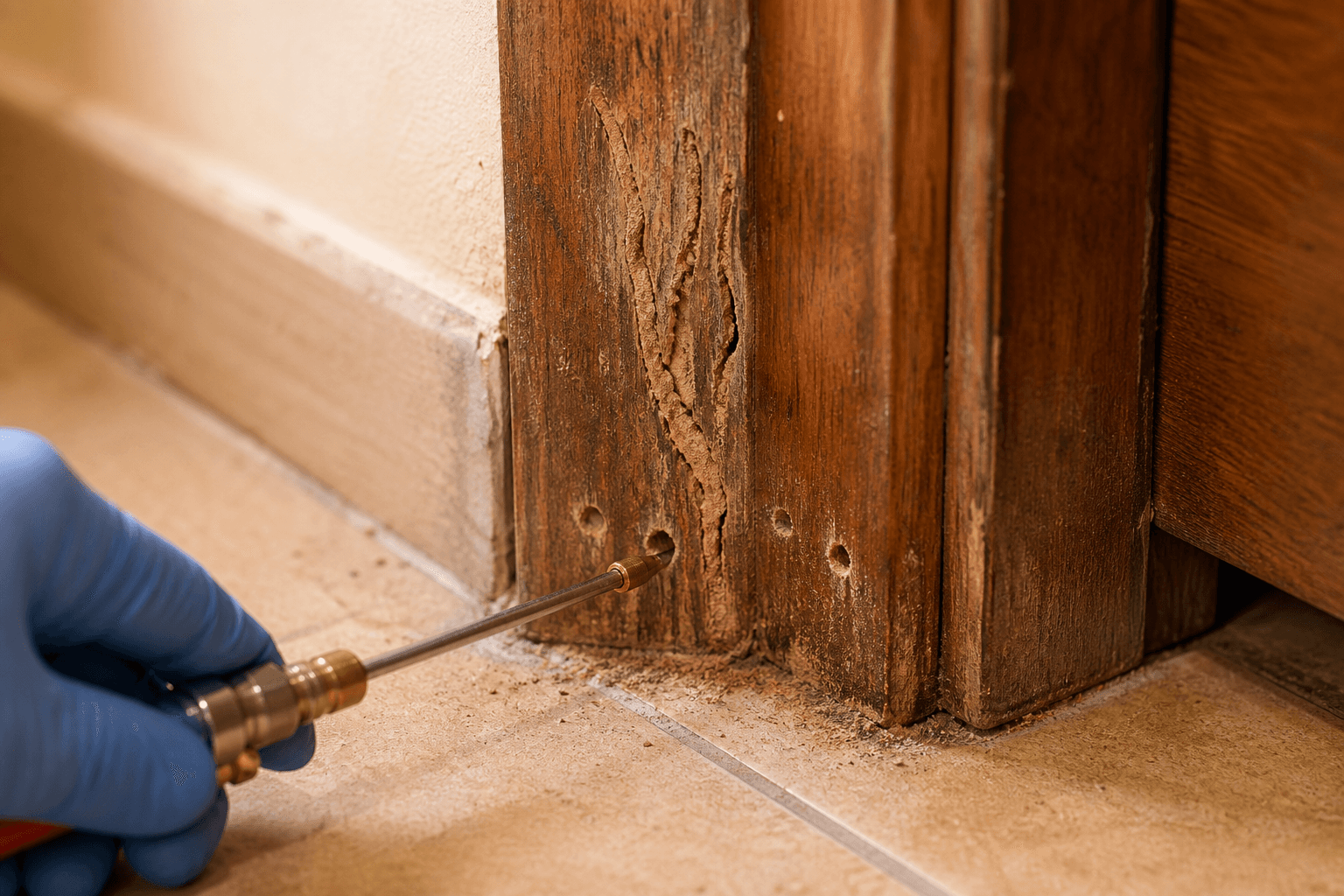
- Frass — small piles of hard, six-sided pellets that look like sand or coffee grounds
- Kick-out holes — tiny round holes where pellets are pushed out
- Discarded wings on window sills, often in late summer or fall
- Clean, smooth galleries inside the wood with no mud
If you're finding wings but no mud or pellets, see our signs of termites guide — and make sure it isn't a flying ant by checking our carpenter ants vs termites breakdown.
What they look like
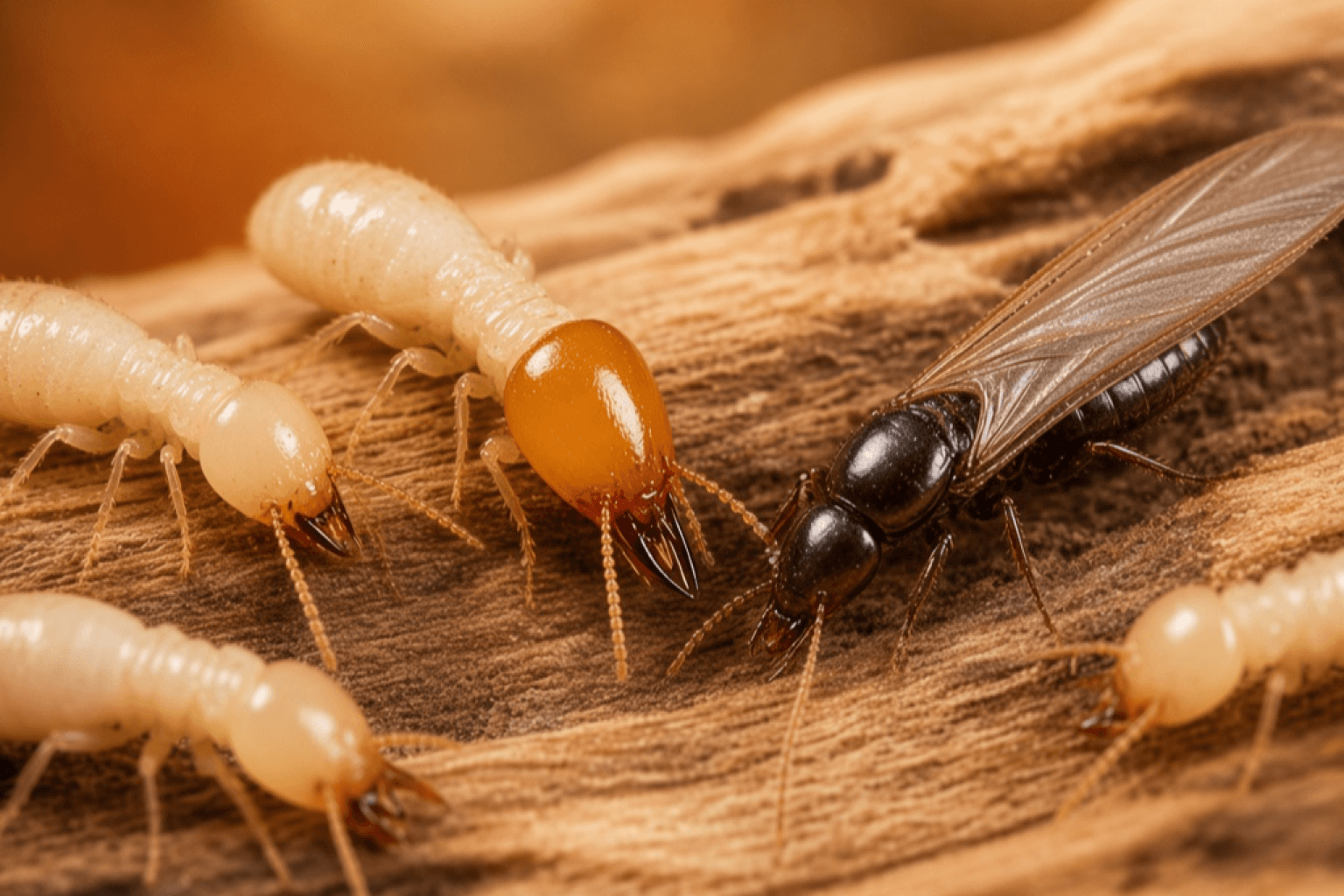
Up close, workers of both types are pale and soft-bodied — the classic "white ants." The easiest visual differences are in the swarmers and soldiers:
- Eastern subterranean swarmers are small and dark brown to black.
- Formosan swarmers are larger and yellowish-brown, and their soldiers have oval, orange heads.
- Drywood swarmers are usually larger and reddish-brown, and the wings often show darker veins near the front edge.
For photos of every caste, see what do termites look like.
Which one does more damage?
Subterranean termites cause far more damage overall. Their colonies are much larger, they eat continuously, and they're spread across most of Florida's soil. The Formosan subterranean termite is especially destructive — a single colony can contain millions of termites.
Drywood termites eat more slowly and live in smaller colonies, but they're hard to spot and can spread to multiple areas of a home over years if nobody notices the frass.
How each type is treated
Because they live in different places, the treatments are different too.
Subterranean termites are treated at the soil, where the colony lives:
- Sentricon® colony elimination — in-ground bait stations around the home. Workers share the bait until the entire colony, queen included, is eliminated.
- Liquid soil barrier — a targeted treatment along the foundation that stops active termites and blocks new ones.
See subterranean termite control and Formosan termite control for how we handle each species.
Drywood termites are treated in the wood:
- Spot treatment for localized infestations — read when spot treatment works.
- Whole-structure tenting when the infestation is widespread.
See drywood termite treatment for details.
Using the wrong approach is the most common (and expensive) mistake: soil baits do nothing for drywood termites in your attic, and spot-treating a board won't stop a subterranean colony living in the yard.
What to do if you think you have termites
- Don't disturb or spray the area. You can scatter termites and hide how far they've spread.
- Take photos of mud tubes, pellets, or wings.
- Get a professional inspection to confirm the species — it decides the treatment.
- Treat the colony, not just the damage. Ask about long-term protection such as Sentricon or a termite warranty.
Frequently Asked Questions
What is the main difference between subterranean and drywood termites?
Subterranean termites live in the soil and travel through mud tubes to reach wood, while drywood termites live entirely inside dry wood and leave behind small pellets called frass. That difference determines both the signs you'll see and the treatment you need.
Are Formosan termites subterranean or drywood?
Formosan termites are subterranean termites. They nest in the soil like Eastern subterranean termites, but their colonies are far larger and they can also build carton nests inside walls when there's a moisture source.
Which is worse, drywood or subterranean termites?
Subterranean termites — especially Formosans — usually cause more damage because their colonies are much larger and feed constantly. Drywood termites spread more slowly but are easy to miss.
Can you have both drywood and subterranean termites?
Yes. In Central Florida it's possible to have subterranean termites coming up from the soil and a separate drywood colony in the attic or trim. A thorough inspection checks for both.
Is the treatment different for drywood and subterranean termites?
Yes. Subterranean termites are treated at the soil with Sentricon baiting or a liquid barrier. Drywood termites are treated in the wood with spot treatment or, for widespread infestations, tent fumigation.
Not sure which termite you have? Panther Pest Control offers free termite inspections across Orlando and Central Florida. Get a free quote or call 407-713-7853.