TermitesOctober 12, 20267 min read
What Do Termites Look Like? Pictures of Termites in Florida
What do termites look like? See pictures of termite workers, soldiers, swarmers, mud tubes, and damage — and how to tell them from ants in Florida.
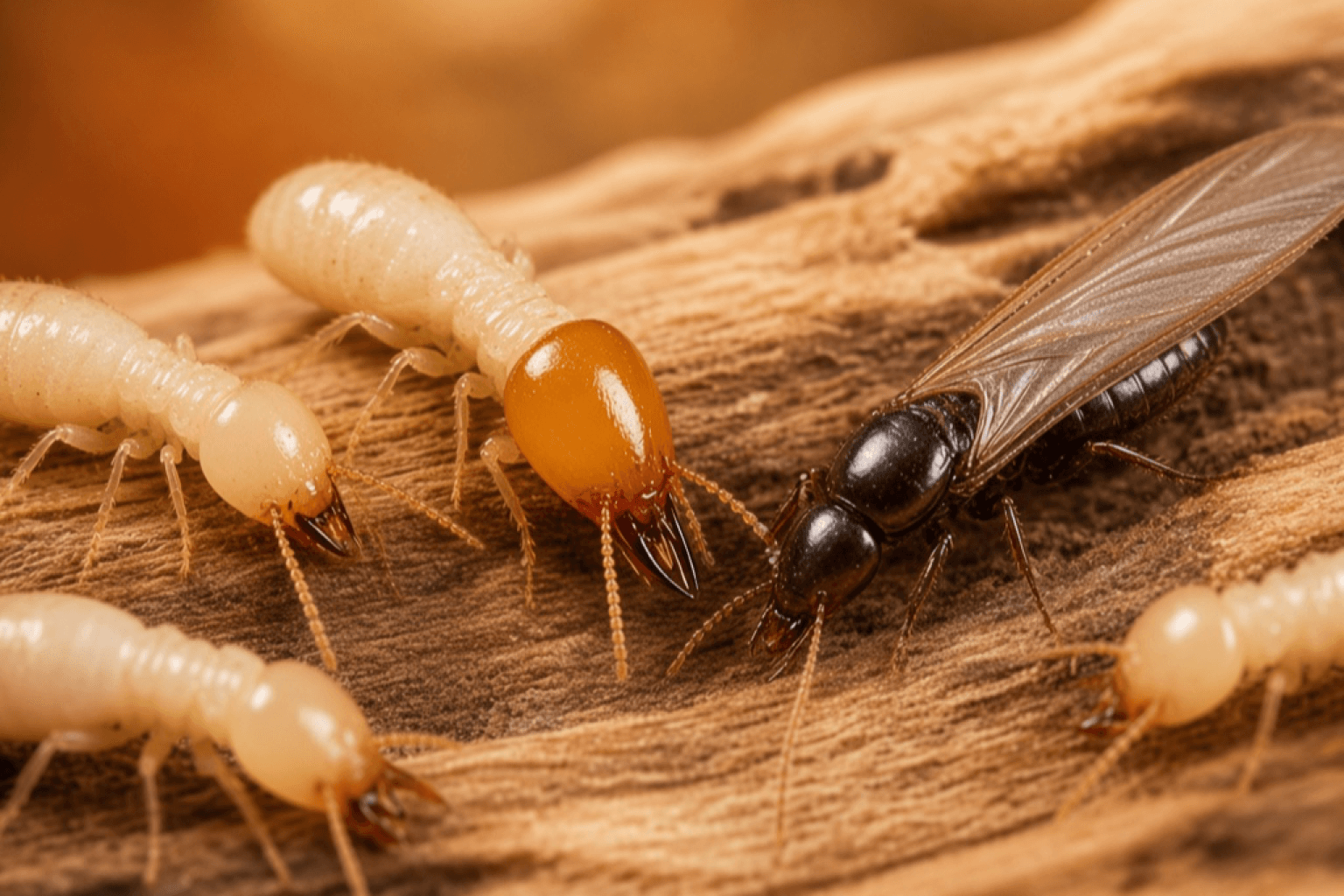
Termites are small, soft-bodied insects about ⅛ to ½ inch long with a straight, thick waist and straight, beaded antennae. Most termites you'll see are pale, cream-colored workers that look like tiny grains of rice. Soldiers have larger, darker heads with jaws, and swarmers are dark-bodied with two pairs of equal-length wings that are much longer than their bodies.
Below are pictures of each type of termite, the evidence they leave behind, and how to tell them apart from ants — with notes specific to Florida homes.
Termite workers
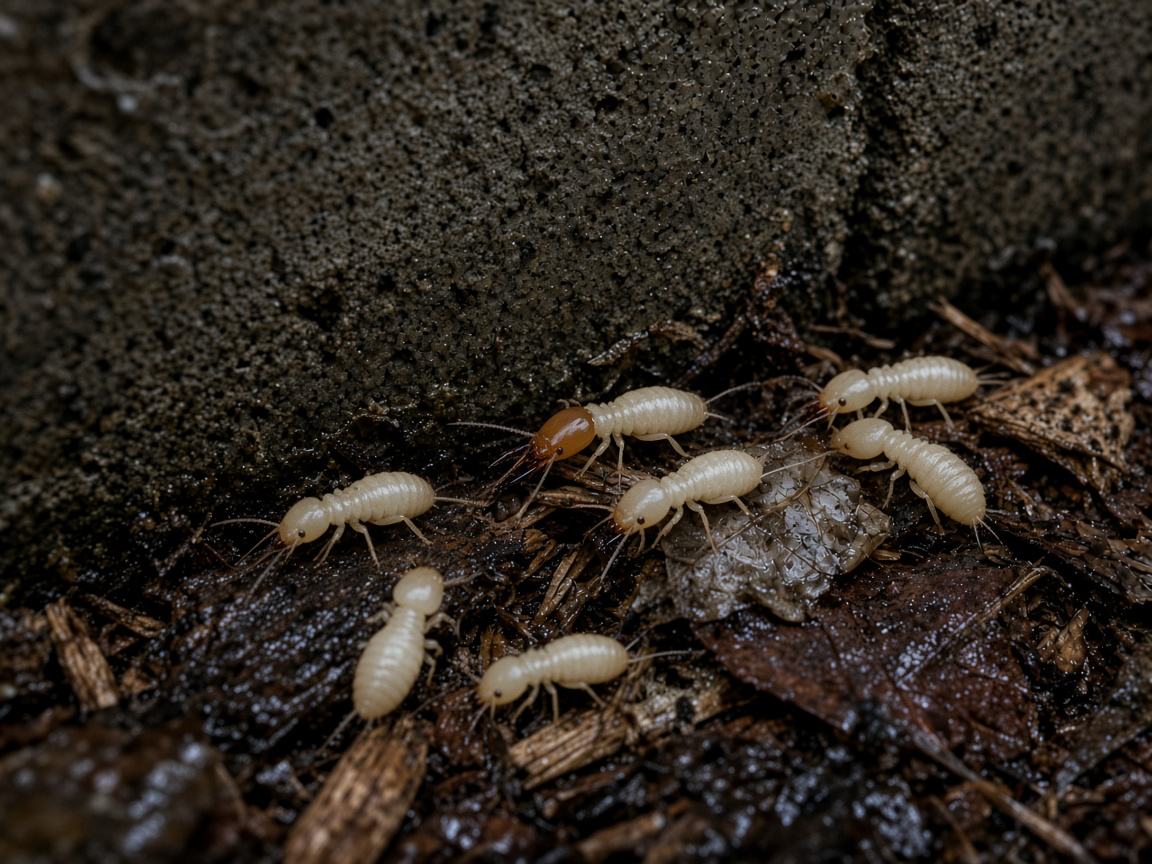
Workers make up most of the colony and do all the damage. They are:
- Creamy white to light tan, sometimes almost translucent
- Soft-bodied with no pinched waist
- About ⅛ inch long, with straight antennae
- Wingless and blind — they avoid light and open air
Because they're pale, workers are often called "white ants." If you break open damaged wood or a mud tube and see small, soft white insects that scatter from the light, they're almost certainly termite workers.
Termite soldiers
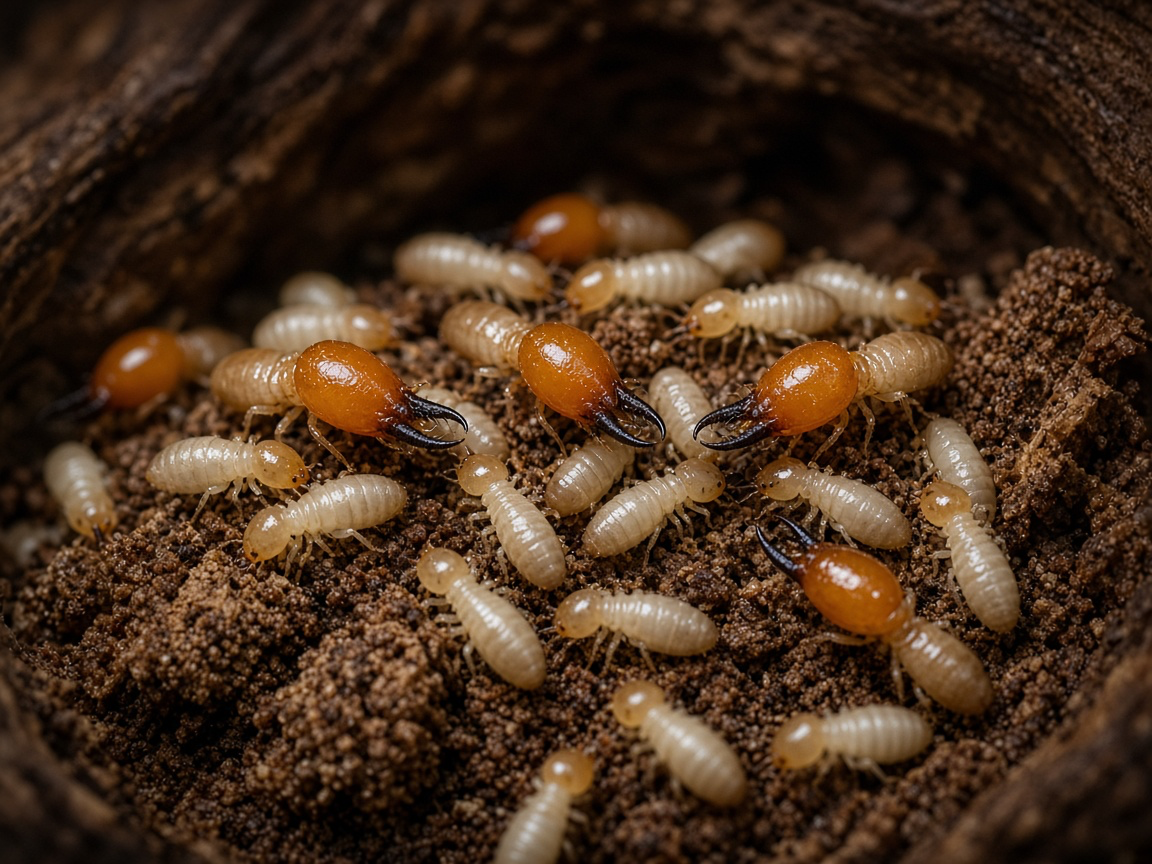
Soldiers defend the colony. They look like workers with an oversized head:
- Large, orange to brown head that's harder than the body
- Dark, curved mandibles (jaws) at the front
- Pale body, no wings
In Florida, Formosan subterranean termite soldiers have a distinctive oval or teardrop-shaped orange head, while Eastern subterranean soldiers have a longer, rectangular head.
Termite swarmers (flying termites)
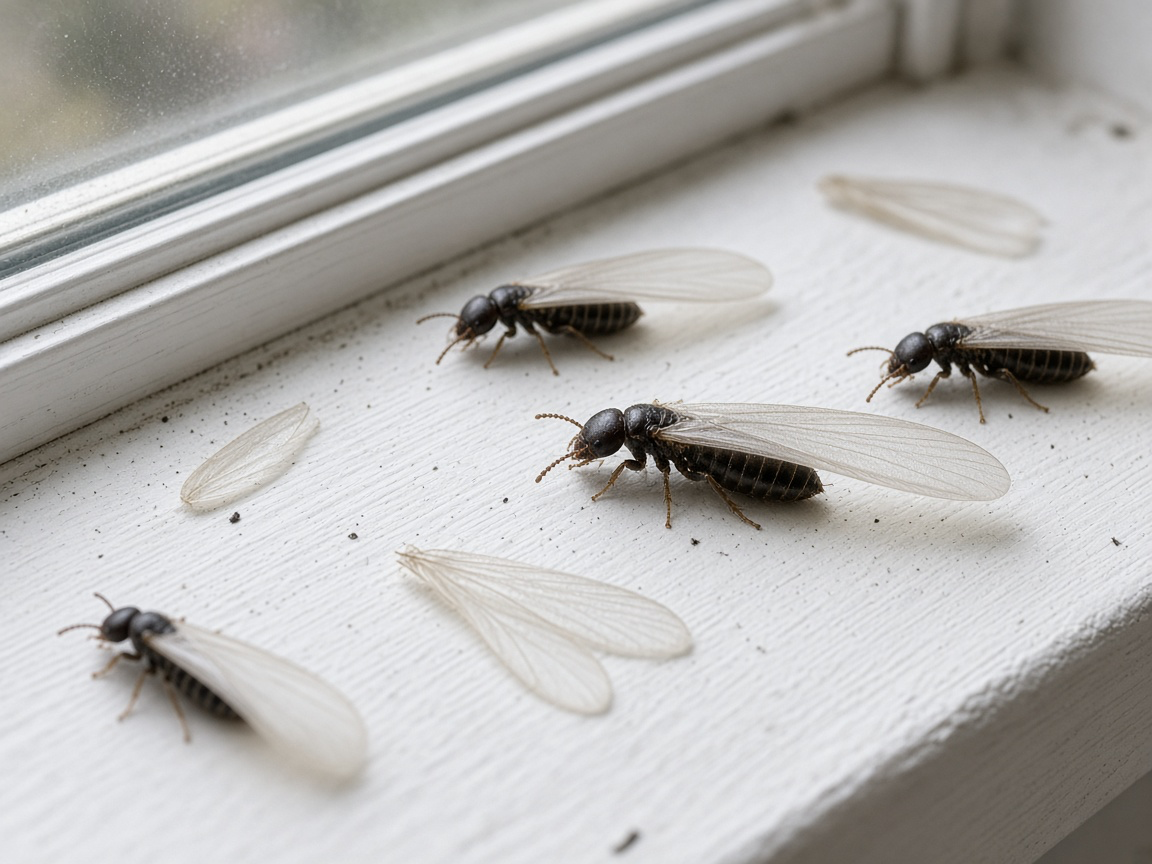
Swarmers, also called alates, are the winged males and females that leave the colony to start new ones. They're the termites homeowners notice most:
- Dark brown to black bodies (Eastern subterranean) or yellowish-brown (Formosan)
- Two pairs of wings of equal length, milky and translucent, extending well past the body
- Straight waist and straight antennae
- Wings break off easily, leaving piles of shed wings near windows and doors
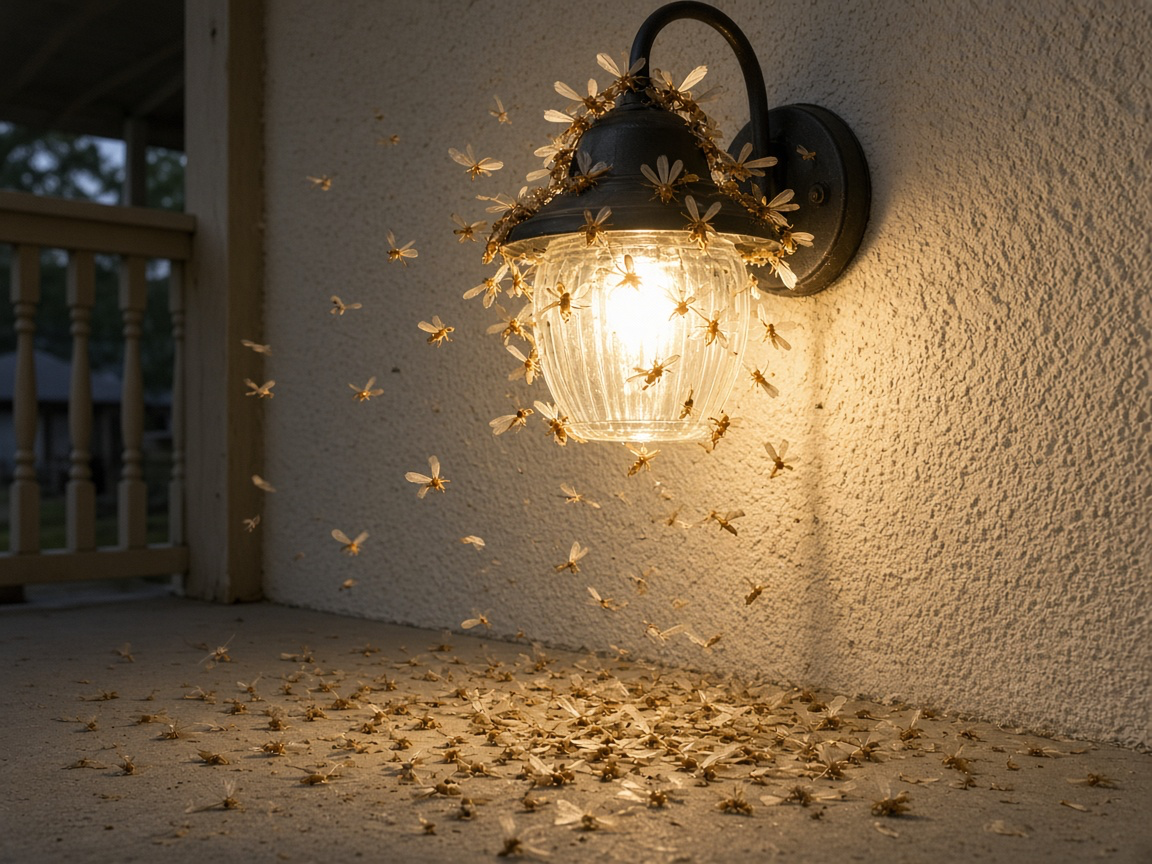
In Central Florida, Eastern subterranean termites usually swarm during the day in late winter and spring. Formosan termites swarm in huge numbers on warm evenings in late spring and early summer, often around porch lights and windows. Seeing swarmers or wings indoors means there's likely an active colony nearby.
What termite evidence looks like
You'll usually spot termite evidence before you see a termite.
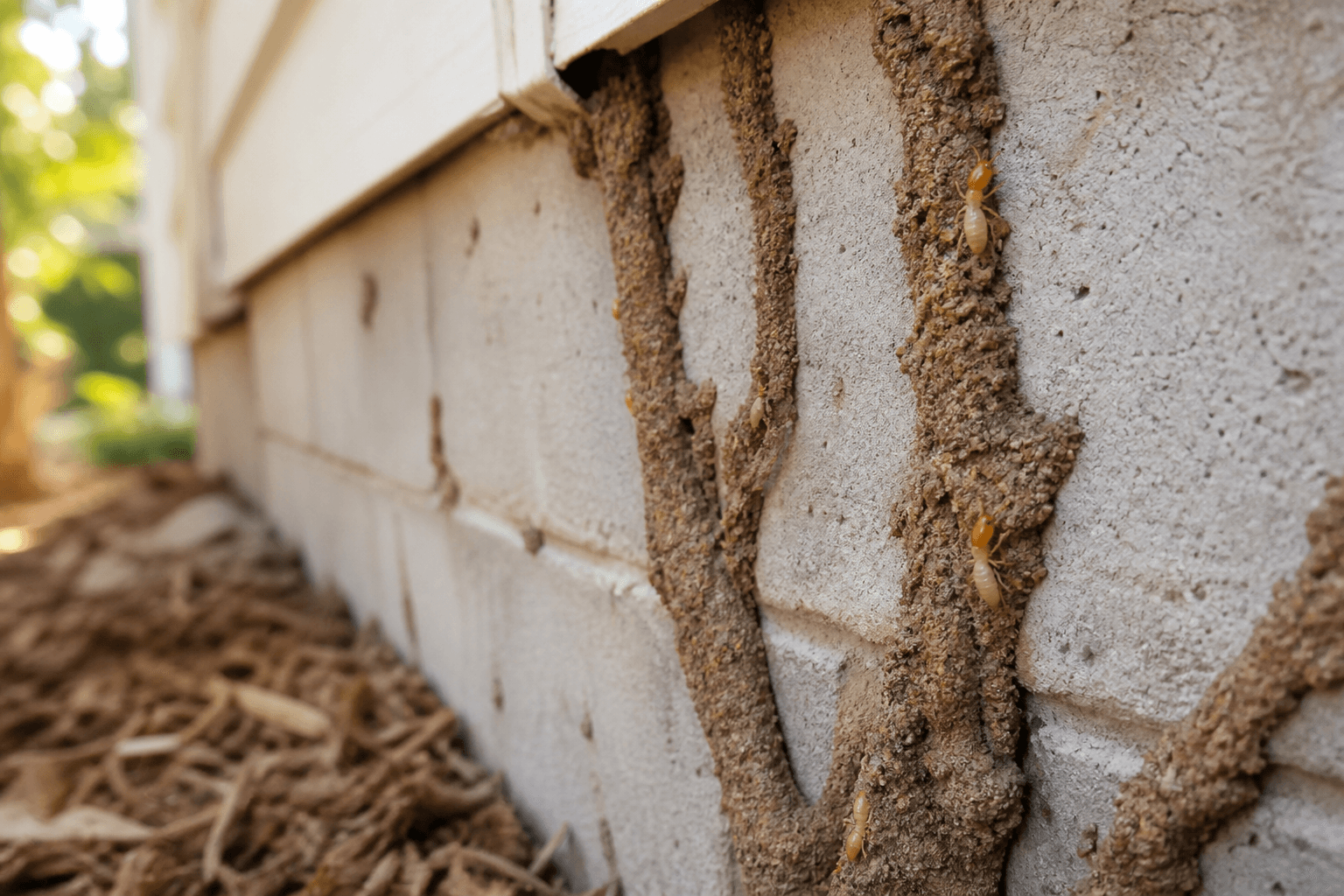
Mud tubes
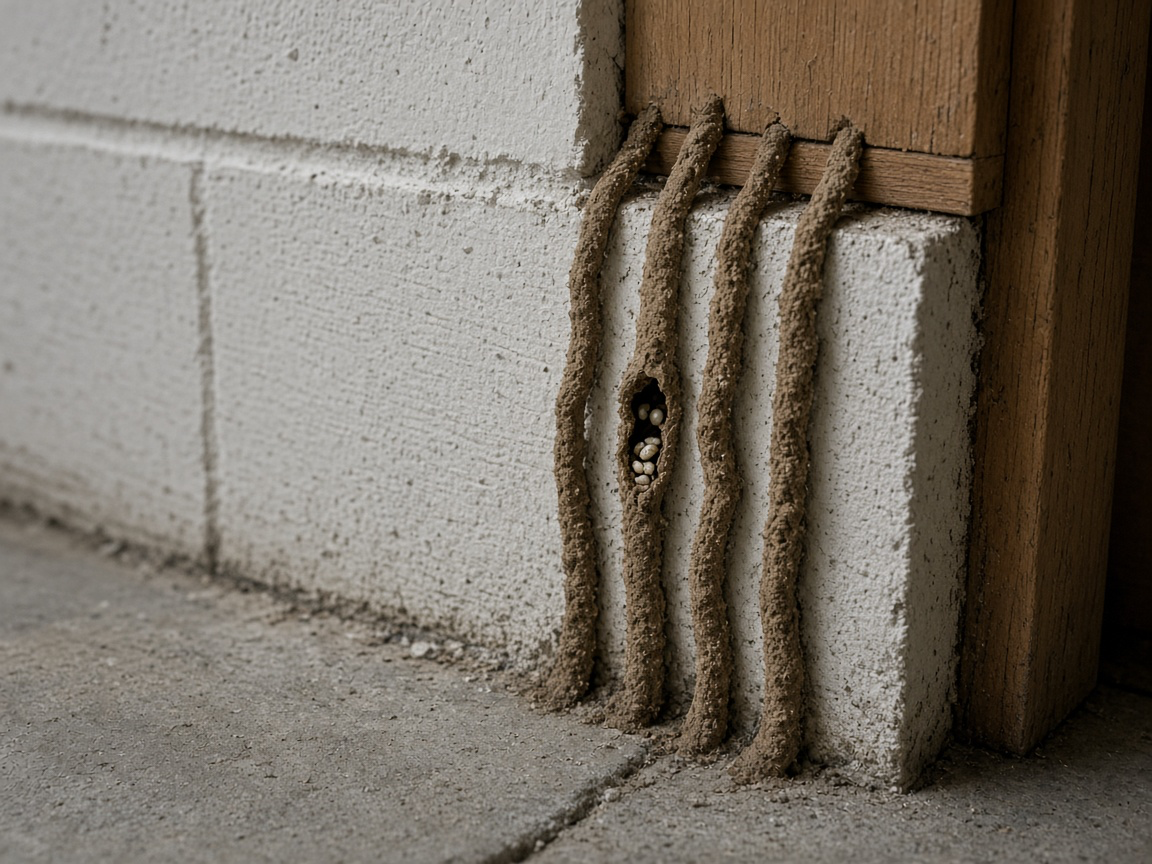
Pencil-width tubes made of soil, running up foundations, slab cracks, garage walls, or plumbing. These are the calling card of subterranean termites.
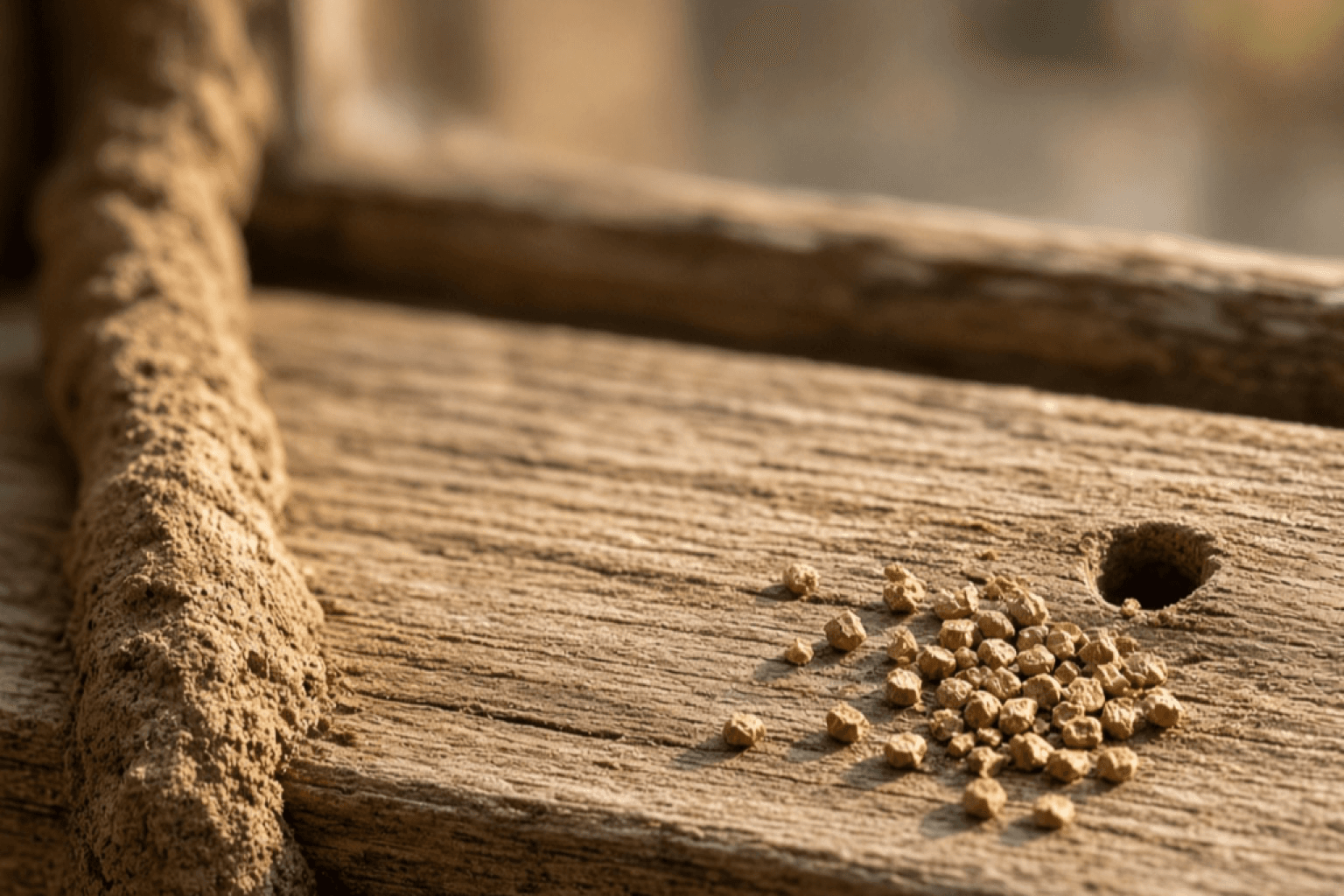
Frass (termite droppings)
Tiny, hard, six-sided pellets that collect in small piles below wood — a sign of drywood termites. They often look like sand, sawdust, or coffee grounds.
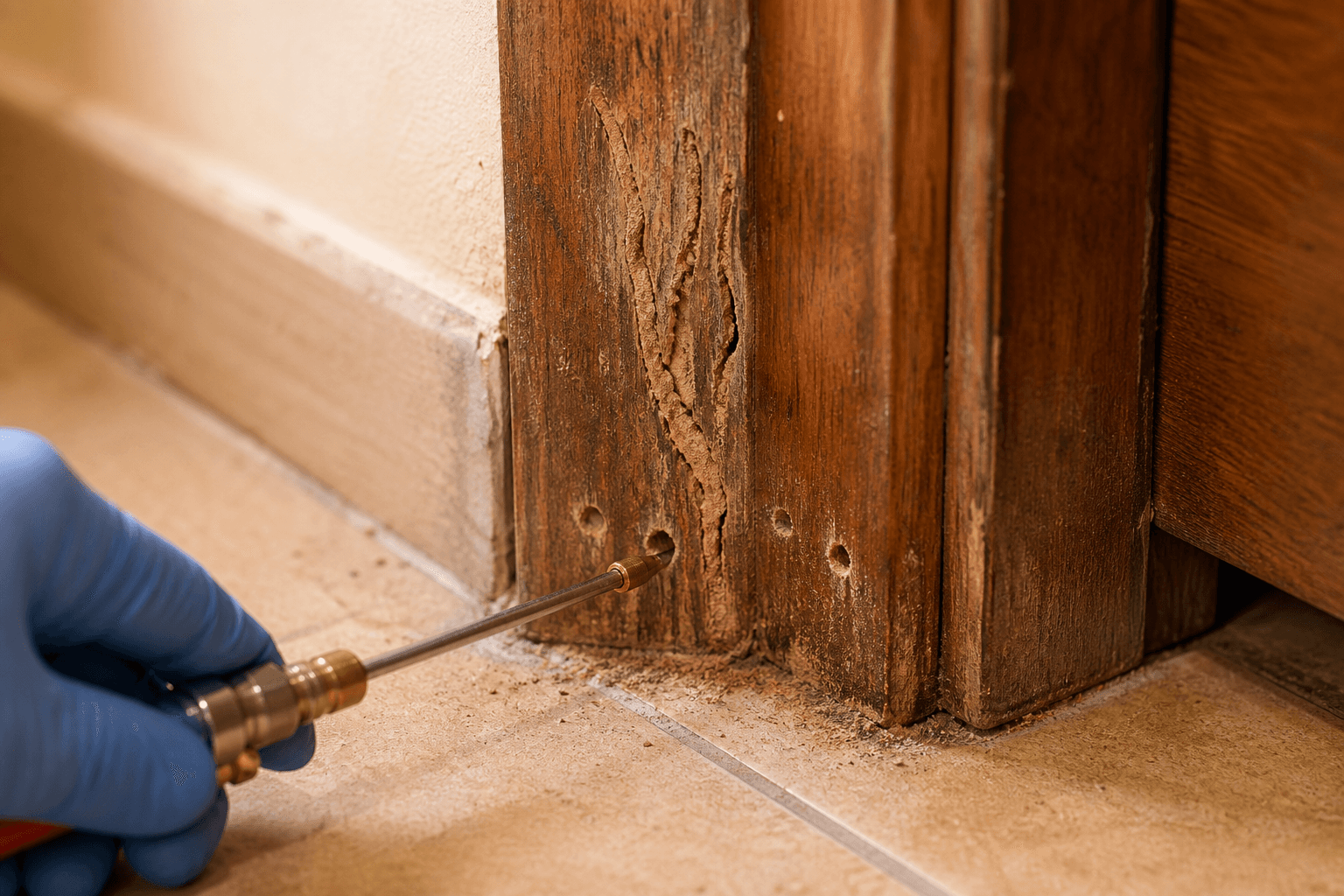
Termite damage
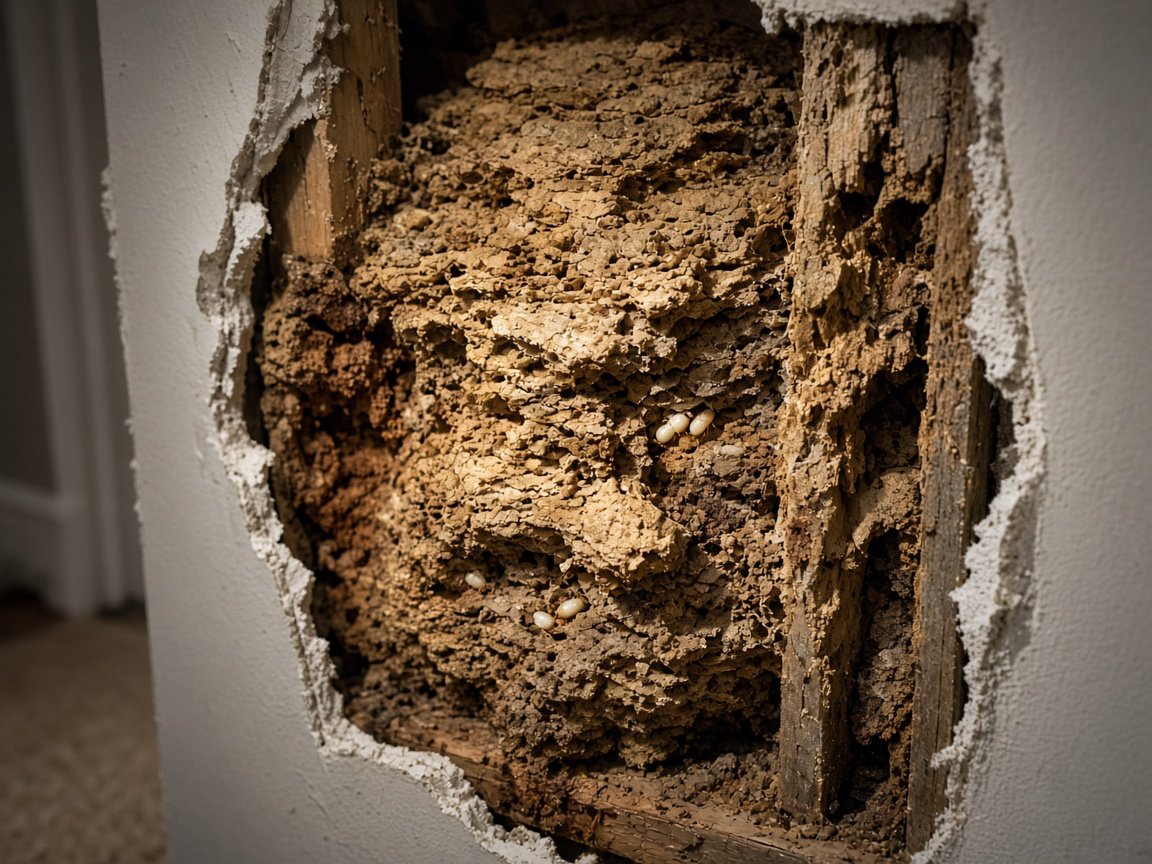
Damaged wood looks hollowed out, sometimes with layers of mud or a sponge-like "carton" material (Formosan termites). From the outside you may notice blistered paint, sagging drywall, or baseboards that sound hollow when tapped.
For the full checklist, see our signs of termites guide.
Termites vs. ants: how to tell the difference
| Feature | Termite | Ant |
|---|---|---|
| Waist | Thick and straight | Pinched and narrow |
| Antennae | Straight, beaded | Bent / elbowed |
| Wings (swarmers) | Two pairs, equal length, much longer than body | Two pairs, front wings longer than back |
| Color (workers) | Pale cream to white | Brown, black, or red |
| Diet | Eat wood | Don't eat wood |
The flying insects most often confused with termites are winged ants. Our carpenter ants vs termites guide walks through the differences in detail.
Types of termites in Florida
Florida has more termite species than almost any other state. The three you're most likely to run into in Central Florida are:
- Eastern subterranean termites — native, nest in the soil, dark swarmers in spring. See subterranean termite control.
- Formosan subterranean termites — invasive, huge colonies, yellowish-brown evening swarmers. See Formosan termite control.
- Drywood termites — live inside dry wood, leave pellets. See drywood termite treatment.
Not sure which one you have? Read subterranean vs drywood termites.
What to do if you think you've found termites
- Don't spray or disturb them — you can scatter the colony and hide its extent.
- Take clear photos of the insects, wings, mud tubes, or pellets.
- Save a few specimens in a sealed bag or jar if you can.
- Schedule a professional inspection to confirm the species and the right treatment. We offer free termite inspections across Central Florida.
Frequently Asked Questions
What do termites look like to the human eye?
Most termites look like tiny, pale, soft-bodied insects about the size of a grain of rice, with straight antennae and no pinched waist. Swarmers are darker, with long, equal-length wings that make them look like small flying ants.
What do termites look like in Florida?
Florida termite workers are pale cream to white. Eastern subterranean swarmers are dark brown to black, Formosan swarmers are larger and yellowish-brown, and Formosan soldiers have oval orange heads. Drywood termites leave piles of tiny pellets instead of mud tubes.
What can be mistaken for termites?
Winged ants are the most common look-alike. Ants have a pinched waist, bent antennae, and front wings longer than the back wings; termites have a straight waist, straight antennae, and wings of equal length.
What do baby termites look like?
Young termites (nymphs) look like smaller, even paler versions of workers — tiny, white, and soft-bodied. They're rarely seen outside the colony.
Do termites bite humans?
No. Termites don't bite or sting people. The danger is to your home — they eat structural wood from the inside out.
Think you've spotted termites? Panther Pest Control offers free termite inspections across Orlando and Central Florida. Get a free quote or call 407-713-7853.