Fire Ants in Florida: What You Need to Know (and How to Get Rid of Them)
Fire ants are one of Florida's most unwelcome residents. Whether you've stepped on a mound in your backyard or noticed them spreading across your property, dealing with fire ants in Florida is something most homeowners face at some point - and if you've ever been stung, you know they're not to be taken lightly.
This guide covers everything you need to know, from identifying fire ants and understanding why Florida is such a hotspot, to the safest and most effective ways to get rid of them. If you're ready for professional help now, Panther Pest Control offers residential pest control solutions designed to keep your home and yard fire ant-free.
Why Fire Ants Thrive in Florida
Florida's warm, humid climate is near-perfect for fire ants. The red imported fire ant (Solenopsis invicta) was first introduced to the United States in the 1930s through the port of Mobile, Alabama, and has since spread throughout the Southeast - with Florida being one of the most heavily infested states in the country.
According to the University of Florida IFAS Extension, fire ants now occupy nearly every county in Florida and show no signs of retreating. Warm winters, wet seasons, and open land give them everything they need to establish large, aggressive colonies year-round.
How to Identify Fire Ants
Not all ants are fire ants, but knowing what to look for helps you act fast.
Fire ants are small - typically 1/8 to 1/4 inch long - and reddish-brown to dark reddish-black in color. You may notice workers of varying sizes within the same colony, which is one distinguishing feature.
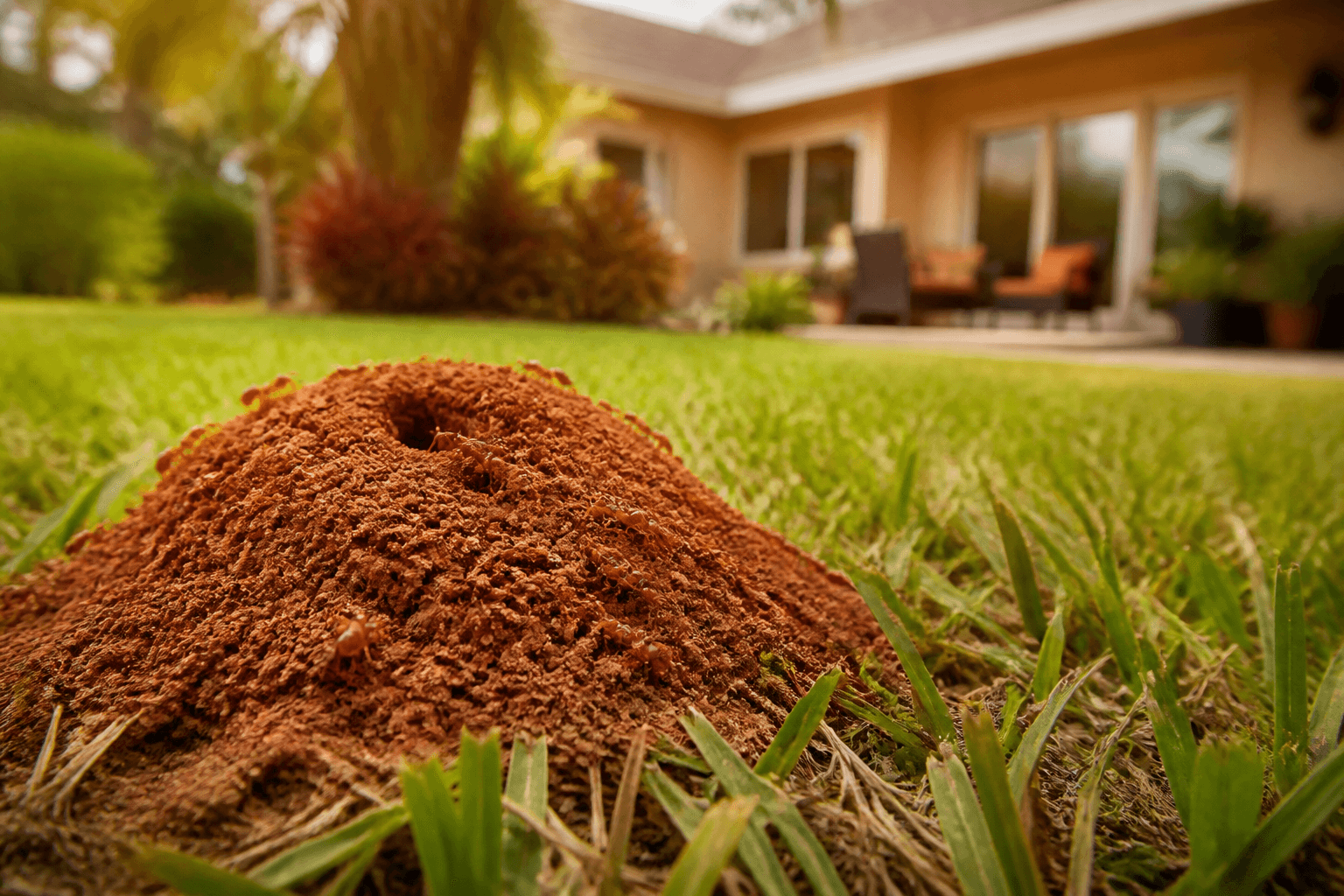
The most telltale sign, though, is the mound. Fire ant mounds are dome-shaped, can reach anywhere from a few inches to over a foot tall, and have no visible opening at the top. They're often found in open, sunny areas like lawns, parks, and fields - and they can feel deceptively quiet until disturbed.
Where Fire Ants Build Their Nests
Fire ants prefer open, sunny areas with moist soil. In Florida, you'll commonly find their mounds:
In lawns and gardens
Along sidewalks, driveways, and fence lines
Near electrical equipment and utility boxes
In playgrounds and athletic fields
On commercial properties with large open green spaces
That last point is worth noting. Fire ant infestations are just as common - and often more disruptive - on commercial properties. From employee safety to customer liability, an untreated infestation can create real problems for a business. Panther Pest Control's commercial pest control services include fire ant treatment tailored to the unique needs of Florida businesses.
Are Fire Ants Dangerous?
Yes - and it's not something to dismiss. Fire ants are aggressive, and when their mound is disturbed, they swarm quickly and sting repeatedly. Unlike a typical ant bite, fire ant stings deliver venom that causes an immediate burning sensation - hence the name.
For most people, stings result in painful, itchy pustules that appear within 24 hours and can linger for several days. For those with allergies, however, a fire ant attack can trigger anaphylaxis - a life-threatening reaction that requires immediate medical attention.
Children, elderly individuals, and pets are particularly vulnerable. The Florida Department of Health recommends knowing the signs of an allergic reaction and seeking emergency help immediately if symptoms go beyond localized swelling and pain.
How to Get Rid of Fire Ants in Florida
Getting rid of fire ants in Florida takes more than pouring boiling water on a mound or reaching for a can of bug spray. These colonies are large, resilient, and capable of relocating when they sense a threat.
There are two general approaches professionals use:
The Two-Step Treatment Method
The two-step method is widely recommended by pest control experts and university extension programs. It involves:
Broadcast baiting - A bait product is spread across the lawn, which worker ants carry back to the colony and share with the queen. This targets the source of the problem.
Individual mound treatments - Active or visible mounds are treated directly using contact insecticides or drench solutions.
This combination is more effective than either method alone and is especially useful for larger properties with multiple mounds.
Ongoing Maintenance Treatments
Because fire ants in Florida are so persistent, a one-time treatment often isn't enough. New colonies can move in from neighboring properties, and surviving queens can rebuild quickly. A regular treatment schedule - typically every few months - keeps populations under control over time.
DIY treatments can knock back visible mounds, but they rarely address the full colony and don't provide lasting protection. A licensed pest control professional will treat the problem at its source.
Preventing Fire Ants on Your Property
While it's difficult to guarantee a completely fire ant-free yard in Florida, there are steps you can take to make your property less attractive to them:
Keep your lawn mowed and well-maintained
Avoid overwatering, which creates the moist soil fire ants prefer
Seal cracks and gaps in your home's foundation and exterior walls
Keep outdoor food sources like pet food and compost bins covered
Inspect your property regularly, especially after heavy rain, which can cause fire ants to relocate
Staying proactive makes a real difference - and it makes professional treatments more effective when they're needed.
Take Back Your Yard
Fire ants in Florida aren't going away on their own. They're persistent, painful, and potentially dangerous - and the longer an infestation is left untreated, the harder it becomes to manage.
Whether you're dealing with a single mound or a lawn covered in them, Panther Pest Control has the tools and local experience to get the problem under control. We serve homeowners and businesses across Florida with treatments that are effective, targeted, and safe for your family and pets.
Contact Panther Pest Control today for a free quote and let's get your yard back.
Frequently Asked Questions
Why are there so many fire ants in Florida?
Florida's warm climate, mild winters, and wet seasons create near-ideal conditions for fire ants year-round. The red imported fire ant has spread throughout the Southeast since being introduced in the 1930s, and Florida remains one of the most heavily affected states.
Can fire ants come inside my home?
Yes. While fire ants typically nest outdoors, they can enter homes in search of food or water - especially during periods of heavy rain or drought. Sealing entry points and keeping food stored properly are good first steps, but professional treatment may be needed if they're consistently finding their way inside.
How do I know if I'm allergic to fire ant stings?
Signs of a serious allergic reaction include difficulty breathing, chest pain, dizziness, swelling of the face or throat, and hives beyond the sting site. If you or someone nearby experiences these symptoms after being stung, seek emergency medical attention immediately. If you've had a reaction before, speak with your doctor about carrying an epinephrine auto-injector.
Are fire ant treatments safe for kids and pets?
When applied correctly by a licensed professional, fire ant treatments are safe for your family and pets. Panther Pest Control uses targeted treatments and will advise you on any precautions to take after application.
How many times can a fire ant sting?
Unlike bees, fire ants can sting multiple times. A single ant may sting several times in one encounter, and because they swarm when disturbed, you can receive dozens of stings very quickly. If you disturb a mound, move away from it quickly and brush any ants off your skin immediately.